

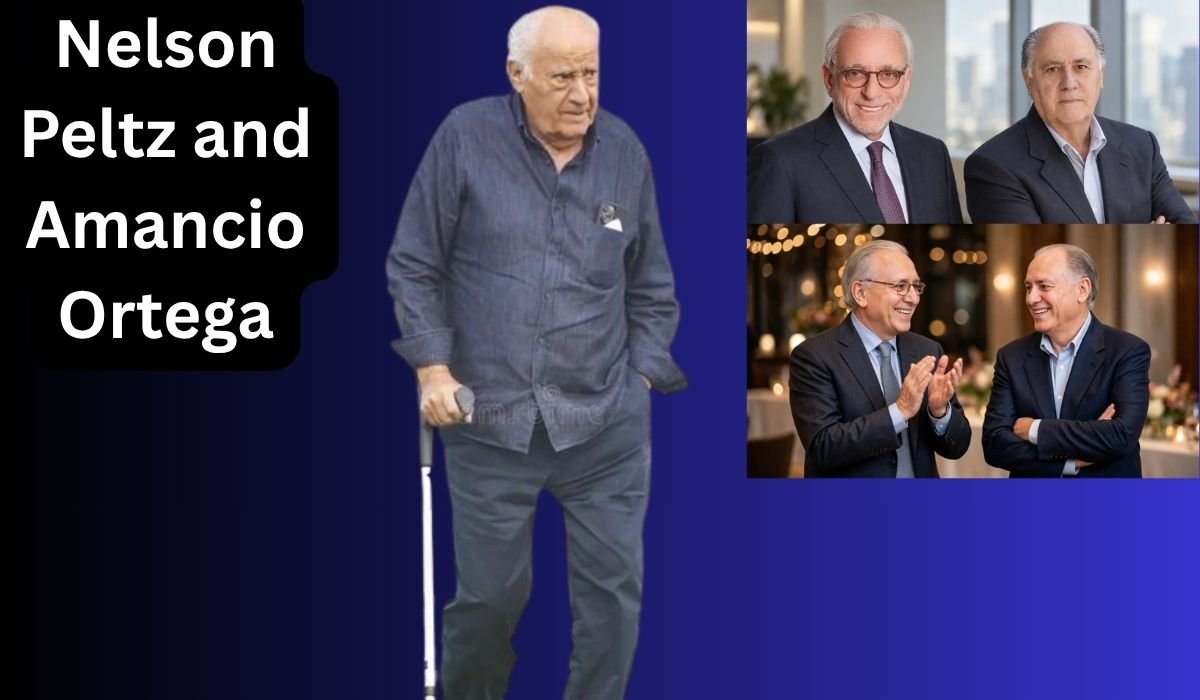
People often mention Nelson Peltz and Amancio Ortega in the same breath, mostly because both built huge fortunes in very different ways. One is a New York dealmaker who pushes boards to change course. The other is a Spanish founder who grew a small workshop into a retail giant.
This guide keeps their stories apart, then brings them together. You’ll see who each man is, how he made his money, what he owns today, and what the records say about any link between them. We’ll finish with lessons founders and investors can actually use.
Are Nelson Peltz and Amancio Ortega business partners?
People keep asking are Nelson Peltz and Amancio Ortega business partners, and the answer is no. Nothing in the public record points to a business partnership between them.
They work in different industries and on different continents. Most of the confusion comes from both men being famous billionaires linked to household brands, and neither has joined the other’s deals.
- No known joint venture between them
- No reported co-investment in the same company
- Separate firms, advisers, and home markets
- No shared board seats on record
Read More: Bob Chapek and John Paulson: The Powerful Truth About Their Connection
Are Nelson Peltz and Amancio Ortega connected
Readers also ask are Nelson Peltz and Amancio Ortega related. Sources show no family relationship. The only link is the one readers draw themselves, since both men are known for building value in consumer companies.
How are Nelson Peltz and Amancio Ortega different
Peltz buys stakes and pushes from the boardroom. Ortega built a company from scratch and kept control for decades. One works on other people’s businesses, while the other made his own. That gap shapes everything that follows.
Who is Nelson Peltz?
If you’re asking who is Nelson Peltz, he’s an American investor known for pushing large companies to change. As of the September 27, 2026 status date, Nelson Peltz is still a leading voice in corporate America.
Under Nelson Peltz current role 2026, he is CEO and Founding Partner at Trian, and he holds the Chairman Emeritus title at Wendy’s.
- Served on Unilever‘s board as a non-executive director from 2022
- Built his firm with two long-time partners
- Known for big consumer brand campaigns
- Active in media and philanthropy
What is Nelson Peltz known for
He’s known for buying stakes in well-known brands and pressing management on strategy, costs, and board makeup. His name is tied to Heinz, Procter & Gamble, and a very public media fight in 2024.
Nelson Peltz and the Rise of an Activist Investor
Peltz started in his family’s food business and grew into one of America’s best known dealmakers. The route ran through small buyouts, bigger bets, and a reputation for hard bargaining.
Along the way he learned how boards think, how managers protect their turf, and how steady pressure can change a company’s direction over several years.
- Family business first
- Industrial deals in the 1980s
- Public company stakes next
- A long-term investment firm as his home base
Early Life and Family Roots
Peltz grew up in New York and joined his family’s food distribution firm in 1963. He learned margins, logistics, and customer demands early, habits that stayed with him through every later deal.
From Dealmaker to Corporate Powerhouse
In the 1980s he and Peter May took control of Triangle Industries. That run later led to Triarc Companies, a holding company with food and beverage brands under its roof.
Founding Trian Fund Management
In 2005, Peltz, Ed Garden, and May launched Trian Fund Management. The firm bought big stakes in consumer companies and worked with boards to raise long-term value.
Nelson Peltz Net Worth and Wealth Snapshot
Estimates put his net worth in the low billions, built from Triarc, Trian fees, and long-held stakes. Figures differ by tracker, so treat any single number with care.
Corporate Activism as a Business Strategy
Activism means buying a meaningful stake, then pressing a company to do better. It’s public, often noisy, and always tied to returns for shareholders.
Peltz made it a career. He argues that boards and managers drift without outside pressure, and that fresh ideas can lift results over time.
- Ask for board seats
- Push for cost discipline
- Question weak business units
- Bring in new leadership ideas
What an Activist Investor Actually Does
An activist investor studies a company, builds a stake, and shares a plan with management. If talks fail, the investor may run board campaigns and ask other owners to back new directors.
Signature Campaigns That Shaped His Reputation
His best known fights include Cadbury Schweppes, DuPont, and Procter & Gamble. These boardroom battles built his name, and the Disney fight in 2024 became the loudest of them all.
Case Study: The Heinz Playbook
Peltz joined Heinz’s board after a 2006 fight and pushed for cost control and brand focus. In 2013, Heinz was sold in a deal backed by 3G Capital and Berkshire Hathaway, a payoff for patient holders.
Wins, Losses, and Lessons
The Nelson Peltz Disney board fight 2024 is his clearest loss. He and James Rasulo ran a proxy contest for board seats. At the annual meeting, holders backed the company-backed slate, though Peltz drew real shareholder support. The lesson: patience, clear data, and a strong plan matter.
Trian’s 2026 Janus Henderson deal
The Nelson Peltz Janus Henderson deal saw Trian team with General Catalyst to buy Janus Henderson Group in a take-private transaction, with Qatar Investment Authority also involved.
The headline price was $52 per share, paid as cash per share. The June 30, 2026 completion ended its public life, and the stock was delisted from the NYSE, the New York Stock Exchange.
- Trian moves from outside pressure to ownership
- Janus Henderson is an asset manager, a field Trian knows well
- Shareholders received cash, not stock
- Private ownership means fewer public filings
Peltz’s continuing connection to Wendy’s
The Nelson Peltz Wendy’s ownership story is a long one. Trian remains tied to the burger chain, and the stake shows up in filings with the US Securities and Exchange Commission.
A recent Schedule 13D/A, covered by Reuters, shows how much is held. It uses beneficial ownership, which counts shares a person can vote or direct, not only shares in his name.
- Reported stake of 16.24% of Wendy’s stock
- 30,913,106 Wendy’s shares counted in the total
- 9,959,519 shares under his sole dispositive power
- The filing shows who can vote and who can sell
| Filing term | Plain meaning |
|---|---|
| Percent of class | Share of all Wendy’s stock held |
| Total beneficially owned | Shares counted together, including joint holdings |
| Sole dispositive power | Shares one person alone can sell |
Who is Amancio Ortega?
If you’re asking who is Amancio Ortega, he’s the Spanish founder of Inditex, the company behind Zara. Amancio Ortega Gaona is among the world’s richest people and one of its least visible.
He stepped back from the top job years ago. Today Marta Ortega Pérez chairs the group, and Óscar García Maceiras serves as chief executive.
- Born in 1936 in Spain
- Started as a shop assistant
- Built his stores around speed
- Prefers privacy over publicity
What is Amancio Ortega known for
He’s known for a fast, tight supply chain that gets new designs into stores within weeks. He’s also known for skipping interviews and keeping his private life private.
Amancio Ortega and the Creation of a Fashion Empire
Ortega’s story is about patience, small steps, and close attention to customers. He grew from errand boy to owner by learning each stage of making and selling clothes.
Each step added control. He made garments, then sold them in his own shop, then built the systems that tied the two together.
- Learned retail young
- Controlled design and production
- Opened shops near customers
- Reinvested profits into growth
A Humble Start in Spain
Ortega left school as a boy and worked in a shirt shop in A Coruña. He picked up pricing, fabrics, and textile manufacturing basics from the shop floor.
From Garment Maker to Zara Founder
In 1972 he formed Confecciones Goa S.A. to make clothes. In 1975 he opened the first Zara shop, reportedly after a buyer cancelled a large order.
The Birth of Inditex
Zara’s rise led to a group structure, and Zara España S.A. became one early company within it. Inditex later listed on the stock exchange in 2001.
Amancio Ortega Net Worth and Fortune
Ortega’s fortune comes mostly from Inditex shares, dividends, and a large real estate portfolio. Most trackers place him among the very richest people on earth.
A Private Man in a Public Industry
He rarely speaks in public, dresses simply, and has long preferred the workshop to the spotlight. Colleagues describe a boss who listened closely to store feedback.
Does Amancio Ortega still own Zara?
Does Amancio Ortega still own Zara? In a practical sense, yes. Zara belongs to Inditex, the Zara parent company, and Ortega is its controlling shareholder.
People also ask how much of Inditex does Amancio Ortega own. His majority stake gives him a controlling interest, with 59.294% ownership in total.
- The yearly corporate governance report lists his holdings
- That disclosure is a normal part of corporate-governance in Spain
- His combined holding totals 1,848,000,315 shares
- Two family companies hold the shares, not Ortega personally
| Holder | Stake | Role |
|---|---|---|
| Pontegadea Inversiones | 50.010% | Main investment company |
| Partler Participaciones | 9.284% | Second holding vehicle |
| Other investors | Remaining shares | Public market holders |
The Zara Model and Global Expansion
Zara’s edge comes from speed. Teams watch what sells, adjust designs quickly, and send small batches to stores. That keeps stock fresh and waste lower.
Inditex now works as a global fashion retailer, with 5,460 stores in 97 markets. The scale is huge, but the method is still simple.
- Small production batches
- Daily sales data
- Close sourcing near home markets
- Store feedback sent to designers
Fast Fashion Done Differently
Zara designs in small runs, reads sales daily, and restocks what sells. Much of the production sits near Spain, which cuts lead time and reduces unsold clothes.
The Pillars of the Zara Strategy
Three ideas hold it together: quick design cycles, tight stock control, and stores that feed customer signals back to designers. Each one supports the others.
Zara vs. the Traditional Retail Model
Traditional chains place huge orders months ahead and hope for the best. Zara orders less, tests more, and reacts faster. That means fewer markdowns and fresher shelves.
The Inditex Family of Brands
Inditex also owns Pull&Bear, Massimo Dutti, Bershka, Stradivarius, Oysho, and Zara Home. On revenue and net profit, it reported €39.9 billion revenue and €6.2 billion net profit, with stores across markets feeding its online business.
Case Study: Adapting During the Pandemic
When 2020 shut stores, Inditex pushed online sales, joined its channels, and closed weaker shops. The model proved flexible, and profits recovered strongly after the shock.
Two different forms of business influence
Peltz and Ortega show activist investor vs founder-owner in plain form. Peltz pushes from outside with a stake and a plan. Ortega steered from inside as the owner.
They’re two business models. One tries to fix companies built by others, and the other builds and keeps its own.
- Peltz: outside pressure
- Ortega: inside control
- Peltz: persuasion through votes
- Both: focus on shareholder value
Leadership Through Different Forms of Influence
The gap shows up in ownership vs management. Peltz usually owns a small slice and relies on persuasion, while Ortega held the biggest slice and shaped management directly.
Neither style is better. Each fits its job, and each has risks, from boardroom defeats to depending too much on one founder.
- Peltz needs allies
- Ortega needs successors
- Both need good managers
- Both face public scrutiny
Peltz: The Persuader
Peltz relies on research, public letters, and private meetings to push strategic changes. His influence depends on winning other shareholders over, one conversation at a time.
Ortega: The Builder
Ortega shaped culture through store design, supply chain choices, and long hours at the company. His influence is built into how Inditex works every day.
Public Image and Philanthropy
Peltz appears often in media and backs community and medical causes. Ortega stays quiet, though his foundation has given cancer screening and treatment equipment to Spanish hospitals.
Different Industries, Similar Strategic Thinking
Food brands and fashion look unrelated, but the thinking overlaps. Both men studied how a business really makes money, then pushed it to run cleaner and faster.
Neither chased trends for their own sake. They focused on margins, customers, and execution, which is why their records hold up across very different sectors.
- Study the numbers first
- Cut waste early
- Keep the customer in view
- Stay disciplined under pressure
What Connects the Two Men
Both are consumer business specialists. They understand shelves, prices, and shopper habits, and they trust data over gut feeling when the two disagree.
Efficiency as a Shared Obsession
Both watch capital allocation closely, asking where each dollar or euro earns the best return. Peltz pushes for it in boardrooms, and Ortega built it into the system.
Patience and Long-Term Value
Peltz often holds stakes for years. Ortega kept growing Inditex for decades. Neither relied on quick wins, and both let compounding do the heavy lifting.
Process Over Personality
Peltz points to plans and metrics, not charm. Ortega built routines that work without him. In both cases, the process outlasts any one meeting or any one boss.
Nelson Peltz and Amancio Ortega in the Modern Business World
Nelson Peltz and Amancio Ortega now sit in very different places. One keeps reshaping companies, while the other watches his creation run under a new generation.
Both still matter. Peltz influences boardrooms and deals, and Ortega’s holdings anchor one of the largest clothing groups anywhere.
- Peltz: active dealmaker
- Ortega: quiet owner
- Peltz: new private ownership projects
- Ortega: family-led succession
Peltz Today
Peltz leads Trian and just completed a major take-private deal. His work now leans toward ownership and long-term control, not only public campaigns.
Ortega Today
Ortega leaves daily work to Marta Ortega Pérez and the management team. He remains the anchor shareholder and enjoys steady dividend income from Inditex.
Shared Challenges
Both face changing consumers, tougher costs, and public scrutiny. Both also have to plan for succession, since neither can run a business forever.
A Broader Comparison
The Nelson Peltz vs Amancio Ortega question gets clearer side by side. Their paths differ in structure, but the numbers show why each man matters.
Use the snapshot below to see the contrast at a glance, then the milestone list to see how each career moved over time.
- Different home bases
- Different tools
- Different public profiles
- Similar focus on value
Side-by-Side Snapshot
| Feature | Nelson Peltz | Amancio Ortega |
|---|---|---|
| Home base | New York, USA | Galicia, Spain |
| Main vehicle | Trian | Inditex holdings |
| Style | Activist pressure | Founder control |
| Best known for | Heinz, Wendy’s, Disney fight | Zara and Inditex |
| Public profile | High | Low |
What Stands Out
The big split is investment stakes vs controlling interest. Peltz works with modest holdings and persuasion, while Ortega holds control and decides directly. That difference explains almost every other contrast.
Key Milestones at a Glance
| Year | Milestone |
|---|---|
| 1963 | Peltz joins the family food business |
| 1972 | Ortega forms Confecciones Goa |
| 1975 | First Zara store opens |
| 2005 | Trian is launched |
| 2022 | Marta Ortega Pérez becomes chair |
| 2026 | Janus Henderson take-private completes |
Lessons From Their Business Journeys
Their careers offer practical ideas you can use. Pick the ones that fit your own stage, size, and goals, and ignore the rest.
The best lessons are simple. Know your numbers, stay patient, and build systems that keep working when you’re not in the room.
- Study before you act
- Stay patient
- Build repeatable processes
- Protect long-term value
Practical Takeaways From Both Careers
Start with data, set clear goals, and review results often. Both men show that steady, boring discipline beats flashy moves over long stretches.
What Founders Can Borrow
Founders can copy Ortega’s habit of staying close to customers and controlling the key steps of their product. Short feedback loops keep a young company honest and fast.
What Investors Can Borrow
Investors can learn from Peltz to do deep research, state a clear plan, and accept that some fights are lost. A good process still pays off across many bets.
FAQs
Are Nelson Peltz and Amancio Ortega related?
No, sources show no family relationship between them. Both are simply well-known billionaires in consumer-focused businesses.
Does Amancio Ortega still own Zara?
Yes, through Inditex, the company that owns Zara. He is its controlling shareholder with a majority stake of 59.294%.
What is Nelson Peltz best known for?
He is known as an activist investor who takes stakes in big brands and pushes for change. Heinz, Wendy’s, and the 2024 Disney proxy fight are his best-known cases.
What happened with Trian and Janus Henderson in 2026?
Trian and General Catalyst bought Janus Henderson in a take-private deal at $52 per share. It completed on June 30, 2026, and the stock was delisted from the NYSE.
How are Peltz and Ortega different as business leaders?
Peltz works from outside with investment stakes and persuasion. Ortega built his company and kept control as its founder-owner.
Conclusion
Peltz and Ortega took very different roads to success. Peltz built his name through research, persuasion, and patient boardroom pressure, while Ortega built Inditex through speed, control, and close attention to customers.
Their records show no partnership or family tie, yet they share a love of efficiency and long-term value. Founders can learn from Ortega’s tight control of the key steps, and investors can learn from Peltz’s disciplined, evidence-led approach.

Writer and content creator dedicated to spreading hope, faith, and positivity through meaningful words.